

The United States cannot afford another year of inaction on gun control. The evidence is overwhelming, the tragedies relentless, and the public’s demand for reform undeniable.
Yet year after year, lawmakers fail to act, and families pay the price.
As the holiday season returns, so does a familiar and devastating pattern.
The United States once again faces the grim and familiar reality of gun violence stealing lives during what should be a season of joy, family and celebration. Instead of laughter and light, too many families are left trying to piece together the remains of broken homes and shattered communities.
On Dec. 1, a shooting at a children’s birthday party in Stockton, California left four people dead—three of them children—and 11 more injured. Balloons, cake, and gifts were replaced by police tape, sirens, and grief.
“Tragedy of this nature is unthinkable,” District Attorney Ron Freitas told reporters at the scene. “Violence of this nature has absolutely no place at any time, shape or form—and children should not be harmed by gun and gang violence.”
Yet the Stockton shooting was not an isolated event.
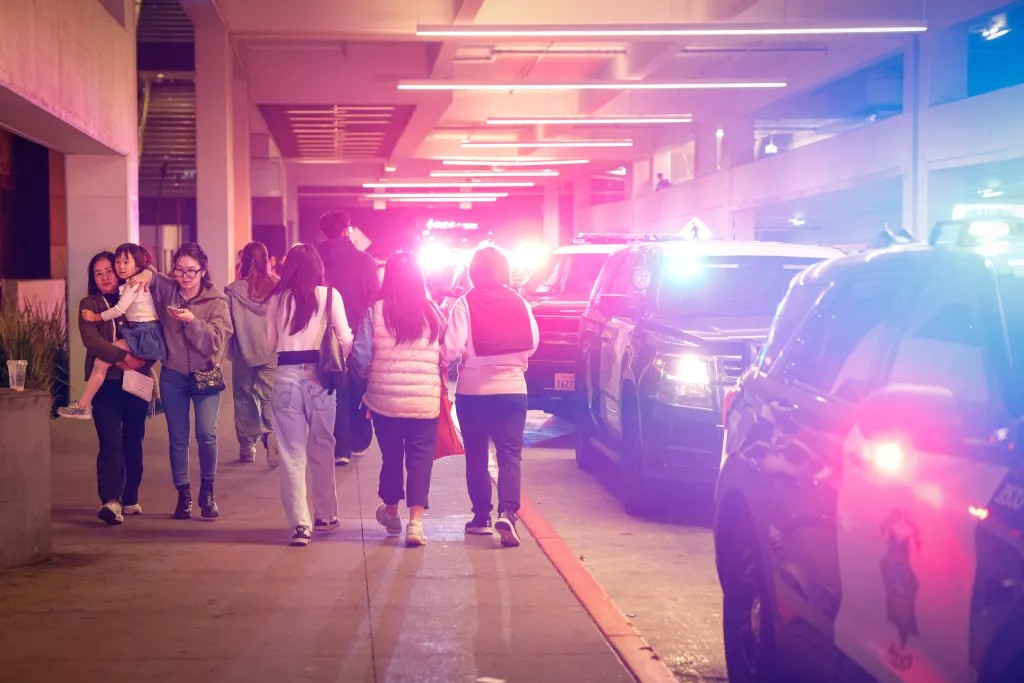
Just days earlier of the Stockton shooting, on Nov. 28, Black Friday shoppers at Westfield Valley Fair Mall in Santa Clara, California, fled in panic when gunfire erupted, injuring three people.
What should have been a day of holiday bargains became another reminder of how easily violence intrudes on public life.
These shootings are not anomalies. They are symptoms.
The U.S. continues to stand apart from other developed nations in its tolerance for widespread gun ownership with minimal regulation.
Stronger background checks, closing loopholes in private firearm sales, and restrictions on high-capacity weapons are not radical ideas—they are common-sense measures supported by most Americans.
Countries such as the United Kingdom, Japan and Australia enforce strict licensing and background checks, resulting in gun homicide rates far below America’s. The U.S. has nearly 120 civilian-owned guns per 100 residents as well, far more than any other nation.
As a result, tens of thousands of lives are lost to gun violence each year.
The Gun Violence Archive recorded more than 11,000 shooting deaths through September 2025, while the Centers for Disease Control and Prevention reports that the United States experiences one firearm-related death every 11 minutes.
These are not just numbers.
They are empty seats at dinner tables.
They are unopened presents underneath the Christmas tree.
They are childhoods stolen before they had a chance to begin.
They are families torn apart in seconds, left to carry grief that will last a lifetime.
They are parents who will never again hear their child’s laughter echo through the house.
They are siblings who will grow up with a hole in their lives where a brother or sister should have been.
They are communities forced to gather at candlelight vigils instead of holiday parades.
Every statistic is a story cut short. Every “incident” is a family shattered. And every delay in reform is another year where lawmakers choose silence over courage, leaving Americans to pay the price in blood and memory.
Reforms such as stronger background checks, closing loopholes in private firearm sales and restrictions on high-capacity weapons have been debated for decades.
Poll after poll shows that the majority of Americans support these measures. A 2025 Johns Hopkins survey found broad bipartisan support for universal background checks and other evidence-based policies.
However, opponents of stricter gun laws often argue that regulations infringe on constitutional rights or punish responsible gun owners. But the goal of gun control is not punishment, it is prevention.
Background checks and safety regulations do not confiscate weapons from lawful citizens; they aim to keep guns out of the hands of those who pose a clear danger. Other nations have proven that regulation and public safety can coexist.
As Congress prepares to reconvene in January, the surge in holiday gun crimes should not fade into another news cycle. It should be the final wake-up call.
Each failure of reform sends the same message to every citizen of the nation: that this status quo is acceptable.
It is no longer a question of whether solutions exist. The question is whether lawmakers will find the courage to act before another year passes.
Gun violence is not an unavoidable part of American life. It is the result of choices.
And until different choices are made in the halls of power, the price will continue to be paid in blood, memory and loss.








Paul Antle • Dec 9, 2025 at 5:37 am
Given
1–that “guns are durable, and if maintained properly, they can last a century or more.” and “about 392 million guns [are] in circulation.” (quotes from The Trace )
2–that 392 million firearms is far in excess of what is needed to create chaos. (The total gun-death rate was about 15 per 100,000 US residents in 1980 when there were only 150 million guns; in 2023, the rate was about 14 per 100,000 people.)
3–that every current gun ban proposal “grandfathers” all previously purchased guns.
Firearms-related violence will not be significantly reduced over the next 75 years.
Paul Antle • Dec 8, 2025 at 5:41 pm
Given that there are 400 million firearms in the US, that firearms have a useful life of about a century, that inthe past the murder rate was similar to now with half this number of guns, and that the gun control steps recommended here might freeze but not reduce the number of firearms in circulation, we’re not going to see reduced criminal misuse of firearms for the next 75 years no matter what laws pass.