When the founders drafted the First Amendment, they did so with a radical conviction. That the people, not kings or presidents, should be the ultimate check on power.
They guaranteed not only a free press but also the rights to speak, protest and petition.
Today, that safeguard matters more than ever. These freedoms were designed to ensure that citizens could challenge authority openly and hold leaders accountable.
Freedom of the press has always been essential to democracy.
It keeps citizens informed, holds leaders accountable and exposes truths that those in power may want to hide.
Today that freedom faces one of its greatest tests in modern American history.
President Donald Trump and his allies have worked to weaken one of America’s most important rights.
Through rhetoric and influence, he continues a campaign to discredit journalists by calling them “the enemy of the people.” Echoing language used by authoritarian regimes.
Words like those matter.
When a leader undermines the press, one of democracy’s most vital institutions begins to weaken. This strategy is not new.
In Hungary and Poland, leaders consolidated power by labeling journalists as dishonest and restricting access to accurate information. What followed was state-controlled media, silenced dissent and a culture of fear.
The parallels in the U.S. are hard to ignore.
Reporters who challenge official narratives risk losing press credentials. Independent journalists face personal attacks and public ridicule.
Media outlets seen as loyal to the former president, such as Fox News during his administration, were rewarded for repeating talking points rather than questioning them.
Favoring friendly outlets erodes transparency and fosters propaganda, creating a feedback loop that serves power instead of the public.
Even presidents who clashed with reporters from Thomas Jefferson to Barack Obama, ultimately recognized that criticism from the press is a sign of a healthy republic, not a hostile act.
As former President George W. Bush once said, “I consider the media to be indispensable to democracy. That we need the media to hold people like me to account.”
But the pressure does not stop with the press. The freedom of speech and the right to protest are also being tested.
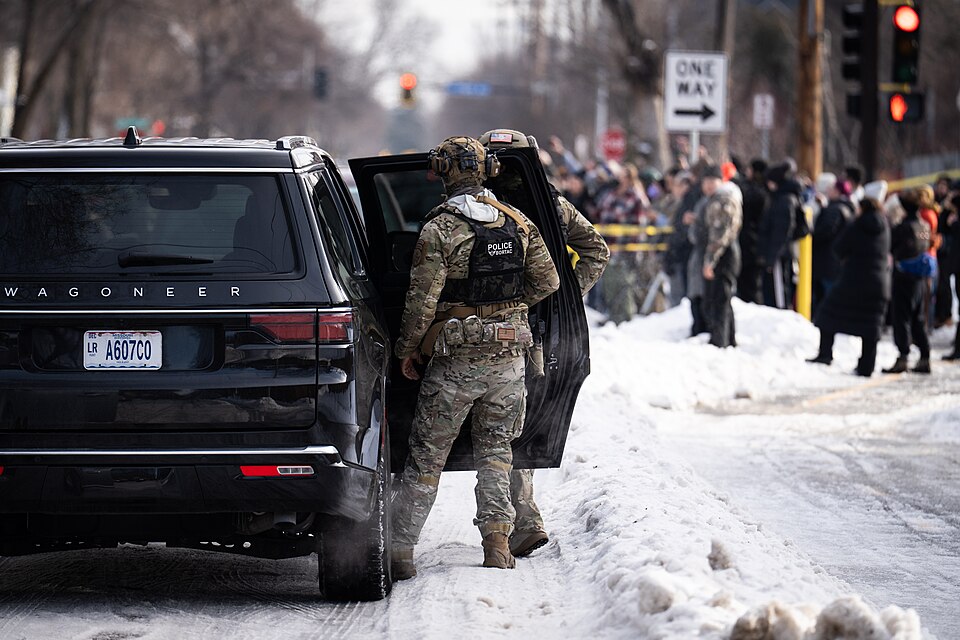
Peaceful demonstrators have been met with aggressive law enforcement tactics, and laws in several states now limit where and how citizens can gather.
In recent years, protesters have faced arrests, surveillance and intimidation simply for speaking out against government actions.
Some states have passed measures that increase penalties for blocking traffic or protesting near government buildings, effectively discouraging public dissent.
These attacks on speech are not limited to marches or organized protests.
Public figures and students alike are facing backlash for expressing opinions.
After conservative activist Charlie Kirk was killed at Utah Valley University, the response included outrage, politicization and investigations into educators’ social media posts.
Similarly, comedian Jimmy Kimmel faced boycotts and calls for cancellation after criticizing the reactions over Kirk’s death and briefly faced suspension amid corporate pressure.
But the freedom of speech was never meant to protect only popular ideas or comfortable opinions.
It exists to defend voices that challenge authority, disrupt complacency and push the nation toward progress.
When speech is punished through fear, public debate suffers. When students, journalists or everyday citizens hesitate to express themselves, the very foundation of democracy is threatened.
When the government punishes dissent or discourages protest, fear replaces debate.
A nation that cannot speak or assemble freely cannot hold its leaders accountable. Limiting this right does not preserve order; it preserves power.
The First Amendment’s promise is only as strong as the public’s willingness to defend it.
Supporting independent journalism, demanding transparency from elected officials and resisting efforts to discredit the media are all essential steps.
That is why civic participation matters more than ever.
California’s ballot this fall includes measures that touch directly on transparency, accountability and the role of government—including Proposition 50.
Exercising the right to vote is part of defending the same constitutional freedoms that protect the press, public expression and protests.
The First Amendment does not protect itself. It relies on citizens willing to use it.
When citizens participate, they give the First Amendment real power.
As Americans head into another election season, we must remember what is at stake.
If the nation loses its freedoms, it loses its voice. And when the voice of the people goes quiet, democracy itself will follow.