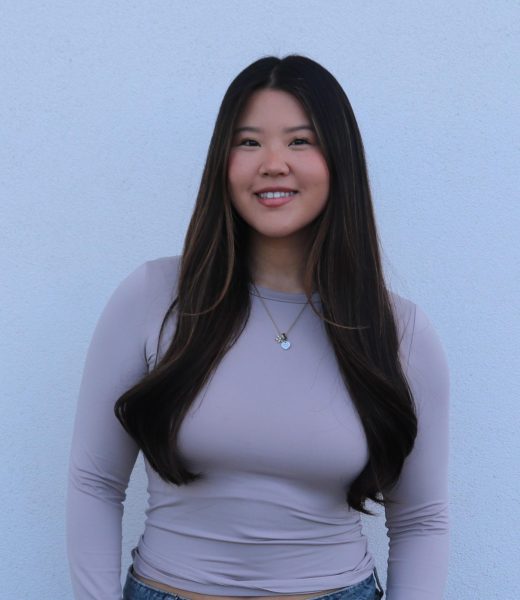
Hi everyone, my name is Crystal and I’m here with… (0:24) Hi, my name is Daisy. I’m a teacher at the Child Development Center here at Cerritos College. (0:29) And I’m Reena Cazaux.
I’m the Outdoor Classroom Coordinator at Cerritos College Child Development (0:33) Center. And how long have you guys been teachers there? Well, I have been a teacher for about (0:40) 20 years, for a couple years, and I was a stay-at-home mom for a while, but I came back. (0:45) I love the center, so I came back with this curriculum for about, yeah, 20 years.
(0:48) Wow. And the same, I started with my practicum in 2004, and then I was hired on about 2005 as (0:57) the adult hourlies, and I’ve been working there for over 20 years. I’ve never left.
(1:03) You know, children learn through exploring through their senses. They learn through, (1:07) you know, touching and feeling and smelling and tasting. But also, I think one of the biggest (1:12) things that I love about our center is that we have this space, we give this space for children (1:18) to be able to think critically, you know, and to theorize about life in general, right, their (1:25) discovery in life.
And instead of telling them, oh, this is what it is, this is what it is, we’re (1:29) co-learners, you know, and we ask them, like, why do you think this is, right? And I think Rina, (1:36) now in this position, is amazing, amazing at it. She takes it to a next level, right? She takes a (1:43) group of children, like, if they were interested in a certain project, and she takes it, and, (1:48) like, what are some of the things, like, some of the projects that you think? (1:51) So this year, I’m working really hard on the garden. So I’m walking the children through (1:58) all the discoveries that happen in the garden.
So we went out there in August, and we looked at the (2:04) soil, we observed it was really dry and crusty and dead, and just the sun had just sucked all (2:10) the moisture out of it. And then we got in there and had the children touch it and grab it and (2:15) break it down and add water to it to see how it transfers and how it transforms. And from there, (2:23) we continue to build onto all the relationships that happen surrounding the soil, so that there’s (2:29) bugs in the soil, there’s plants in the soil, there’s seeds in the soil.
And each group in (2:33) their own developmentally way, they grow a little bit more, they discover something more to it, (2:41) and we just keep layering the knowledge on top of it. And now we’ve grown the seeds, we’ve grown (2:47) the plants, we’ve harvested foods, we’ve shared the foods with our families, and now they’re interested (2:52) in, we’ve done a little bit of cooking, but they’re really interested in taking it further, (2:57) where they’re coming up to me and saying, I want to make mint ice cream, I want to make orange (3:02) popsicles. Sign me up.
Yes, so they all have come to me with their own ideas, their own connections (3:09) to food. And that kind of learning can’t happen when they’re sitting in a classroom doing the (3:15) dittos, like copying everything, the same cookie paste, cookie cutting assignments over and over (3:21) again. It has to be alive with their discoveries.
That’s the things that fly by, or a bee zooms by, (3:27) and there’s a whole discussion. Can I share with you guys the most beautiful thing someone (3:32) said to me in the garden? Yes. Emiliano said, he’s four years old, and they were in the garden, (3:38) and there were flowers, and there were bees, and they were having this conversation about the bees, (3:42) and they’re like, yes, we have to put the water on the flowers so it can make the honey for these (3:47) bees.
And he says, bees make honey. And the butter. And I’m like, butter? Bees make butter.
He says, (3:55) butterflies make butter. It’s just these amazing connections, these beautiful moments that make (4:03) everything so joyous. And that really makes learning joyful.
Yeah, that sounds so fun too. (4:11) Especially today, when we’re outside with the kids, we saw a caterpillar. And then they were (4:16) picking it up, and they’re like, oh, it’s going to turn into a beautiful butterfly.
And then next, (4:21) we go to where the bushes are, and then we see a cocoon. And they’re like, see, I told you, (4:28) it’s going to turn into a butterfly. And then next, we saw a butterfly.
I think it’s so cool (4:32) how you guys have everything there, like milkweeds for the butterflies. You guys have a bunch of (4:38) worms. I love how they’re able to pick them up and see it.
And they’re like, oh, they’re doing this (4:43) for the environment. They’re doing this. I think that’s so cool.
All the relationships and connections (4:47) outside. I think a lot of it, too, is the way the teachers introduce the materials. And (4:55) coming from a, I’ll just talk about my own culture.
It was always like, don’t touch the (5:00) bug. Don’t touch this. That’s nasty.
That’s gross. And then sometimes they would put fear into us. (5:08) But I think our role as a teacher is to help them overcome those fears and help them take (5:17) risks safely.
And I think that’s how children learn, taking risks safely. Not, OK, go ahead (5:22) and do it. But I’m here with you in case you are scared.
And then also teaching them, oh, (5:29) it’s OK. And the importance of saying, ew, worms are so disgusting. Flipping the script and saying, (5:36) worms are so important for our environment.
They aerate the soil, which gives us the food. (5:42) And I think making, like Rina said, all those connections. But I was with you.
(5:49) They were so excited. You had a group of six, seven kids. Daisy, Daisy, Daisy, come.
We found (5:54) a cocoon. And everybody was just surrounding the little cocoon. Yeah, that was pretty cool.
(6:01) I think what makes it so exciting is that you can learn. Caterpillar, cocoon. You can read that in (6:08) a magazine or in the textbook and look at the paperworks and all those little dittos that they (6:13) have for it.
But I think when they see it in real life, they understand that it’s part of their life. (6:21) They’re connected to that. And it helps them grow.
It helps their identity. It helps them grow into (6:27) who they are because butterflies are part of who they are. The cocoons are part of who they are.
(6:33) Yeah, I love the curriculum there. I know it’s Reggio Emilia, right? It’s inspired by (6:39) Reggio Emilia. And how would you explain that curriculum to a parent? Okay.
(6:47) Okay, so Reggio Emilia. I think one of the things for me is the most important piece of Reggio (6:55) Emilia that stands out to me is how the foundation of it is inclusion and diversity. And from that (7:07) foundation, everything grows from it, from the image of the child to the role of the teacher (7:11) and the importance of the environment.
So that’s the piece that really warms my heart and why I (7:16) am obsessed with anything inspired by Reggio Emilia. How I would explain it to the parents (7:23) is just where we center learning on the children. We allow them to discover and (7:30) make those connections in the world.
And that the image of the child is so important to us (7:38) that we want to make sure that they can find their discoveries that’s important to them. (7:43) They can make those meaningful connections. And every curriculum, every child, every classroom, (7:50) every year, it always changes.
So it just it’s really inclusive and depends on what the group (7:56) of children bring that year. And also it’s like looking at children as very capable, right? (8:03) Instead of thinking like, oh, I’m going to give this child all the knowledge that I have, you know? (8:09) But seeing that the children are capable. And another thing that we look at is social constructivism, (8:14) right? Children learn from each other.
Children learn from each other. And they already come (8:20) with lots of knowledge, right? Like Greena said, we are very diverse. You’ve seen that our school (8:26) is very diverse.
People come from, you know, different walks of lives, you know, different (8:31) cultures and different experiences. So a child might have a theory about something or it might (8:38) be stuck about something. And then another child will be like, well, my dad taught me this or my (8:43) dad said this or I have done this with my grandpa.
You know, I’ve done this. So you’re building (8:48) knowledge. They’re constructing their own knowledge, you know, based on each other’s experiences.
(8:54) And another big part of it is research, right? Is researching. Well, what do you think it is in(8:59) asking those open-ended questions which will allow them to like think critically, right? (9:05) They build their own hypotheses about the world around them. Yeah.
And it’s also testing them out, (9:11) right? I remember, I don’t know if you remember this project that we had. This child wanted to (9:16) make a car wash, a car wash. And I said, well, how are you going to make the car wash? So he started (9:22) with the blocks and then they would fall.
And he’s like, well, they keep on falling. And then somebody (9:27) said, oh, it’s because you’re putting the little ones at the bottom and the bigger ones on top. (9:32) You have to put the big ones on the bottom.
So he’s already talking about balance, right? Balance, (9:37) engineering. You don’t even think about this, right? But they really are. Oh, you have to put (9:40) four and you have to put this shape.
And then they tested it out. Well, how can they stay together? (9:46) So they were like tape, right? So they thought tape, but tape also, like the blocks will fall (9:51) down. And then another child said, well, what about glue? My dad builds houses, you know, (9:55) he uses glue and it really sticks to the, you know, to the wood.
So then we asked the question, (10:01) well, how many days, you know, or like, does it stick right away? How long does it take? (10:05) So then it’s like a process, you know, and it just became this huge project where it was like (10:12) all the classroom was involved in it. You know, everybody gave their knowledge and it was just (10:17) incredible. That’s so cool.
I really like enjoy being there. It’s so fun. And I like seeing (10:23) everyone’s personality because I’ve been there for maybe like two and a half months now.
And I feel (10:30) like I’ve really seen like their personalities change and like I can differentiate each person. (10:36) It’s so cool. I love the curriculum there and stuff like that.
But as teachers or I know, (10:41) as a teacher, what does the structure look like for the kids? Well, we do have in terms of, (10:47) you know, some people would call it lesson plans. We’re a little bit more open. We call it plan of (10:53) possibilities, right? Because as we know, anything can change.
You can, you can have a strong plan (11:00) and then a spider walks by and the whole plan changes because you can’t, you can’t uninterest (11:06) the children. That’s their interest and they’re going to go with it with all of their passion. (11:10) And we also look at the different developmental levels.
So it’s not like, oh, it’s just a spider. (11:17) What are you learning? Oh, they’re just playing. Children are really learning, you know, when we (11:23) talk about the spider, you can talk about different parts of the spider, webs, legs.
You could include (11:28) math, right? Talking about cognitive, right? Include math. Well, how many legs does it have? (11:33) You know, and just asking those questions, how many eyes? And then the language. There are also, (11:38) like we said, we’re very diverse and we’re very inclusive.
There are children that don’t have (11:44) the language yet, right? So talking to each other, I think that is, you know, an important piece. (11:52) It makes me think of one of the children in your classroom and she came and she only spoke Spanish (11:59) and when I see her now, she only speaks English to me and she’s, and she’s both. And that’s just in, (12:07) in a two-year-old, in a year and a few months, just her whole language has shifted and now she’s (12:13) dual language.
She has that much knowledge and so now she’s three years old. That’s the strength (12:20) of their capability. Yeah, I did speak to Elisa.
I think she’s the director. She was talking about (12:26) how, like, it’s so important from the ages two to five, cognitively, cognitively. And that she, (12:35) like, loves the idea of, like, being hands-on with, like, the students.
That’s why she loves coming, (12:40) or that’s why she loves being a teacher or she became a director and now she’s, like, leading, (12:45) you know, by example and she really enjoys it. Do you, have you guys always known you guys wanted (12:49) to work with kids? No, I took the long route. I was, I wanted to be an artist and I studied in art.
(13:01) I went to art school. Then I was into fashion design and interior design, so connected to art.(13:08) Then I traveled the world and when I came back, I was into political science.
This is actually, (13:13) so I don’t think you know this, but that took, that whole trip took, like, 15 years of me doing (13:21) different things. When I came back from traveling the world, I decided I wanted to be in political (13:28) science and I was looking at political science and just all the different systems that are out there, (13:34) politics going on right now, and the one thing that really stood out to me was you can’t, like, (13:40) make one decision and it, and it goes down to all the people, that it really needed to be (13:45) more like a grassroots and then, and the people needed to push ideas up and I was thinking of, (13:52) like, how could I do that? What’s, what’s the best way to leave the world a better place than when I (13:57) came? And education really stood out from that point. Like, it highlighted that the importance (14:03) of education and how you can reach all the, all the communities through education.
And then when (14:11) I was trying to decide, great, am I going to be a professor? Am I going to be a preschool? What was (14:15) it? It came down to racism, that they state that children by four years old are already engaging (14:24) in racist behaviors. Like, they leave, they, which doll they, they play with, who they, who they (14:31) navigate towards. And I was like, well, I’m going to stop that and I’m going to go the youngest I (14:37) can go and that was two.
So that’s how, and then I started taking the classes. I started working (14:43) in various preschools and then I was very, very clear that that was my, my calling. So it’s a (14:52) long story to get.
Yeah. I love how diverse the school is too. I know you were teaching (14:58) the morning song in multiple languages.
I find that so cool. Yes, we love, yeah. So we, (15:07) there’s this whole project that we have and it’s the languages of the school.
We’re very (15:12) diverse. Right now we have, I believe it’s, we’re singing in English, Spanish, German, French, (15:19) Russian, Tagalog. We also do sign language.
We have Farsi, Arabic. Other classes have Chinese. (15:29) Oh yes.
Yeah. Yeah. The Mandarin.
And then we also have Italian and, oh my goodness. (15:36) Sign language. Yeah.
We did sign language, but this morning we did, oh my gosh, (15:42) it’s a different language. One of our practicum students taught us. Yeah.
Oh, in Korea. (15:49) In Korea. Yeah.
You were, you were teaching the children Korean as well. So it’s so diverse. And (15:56) that’s why one of the things I just absolutely love.
Yeah. And then just, I think it’s really (16:00) interesting because we learn this when the students come in, the children come in or the (16:05) practicum students or the teachers, and they’re like, well, this is the language, my home language. (16:10) This is the language I speak.
Yeah. So then it adds another layer. It’s not that we just decided (16:15) we’re going to travel around.
It’s when someone comes in like you and you’re like, oh no, I know (16:19) how this, I can sing that in Korean. And then I heard you guys when you were doing it in the (16:24) bathroom. And that’s one of the things like to see a child, right? I think this is why also becoming (16:32) a preschool teacher, but to see a child like in morning meeting and then them, like the song being (16:40) a language that is from home, like to see them just light up, like what’s, it’s a connection.
(16:47) Like they feel seen, acknowledged. So valued. Yeah.
And valued as well. Yeah. So I went a little (16:52) bit different.
Well, I wanted first to become a psychologist. I know we’ve talked about psychology (16:57) a little bit. I wanted to become a psychologist, but I also love children.
So I decided to take (17:04) some psychology classes, but then also went into liberal studies. So I’m like, I’m going to be a (17:09) elementary school teacher. And then I took the child psychology class and I loved the child (17:16) development psychology class.
And I loved it. And then I was like, well, why not get two majors? (17:20) So I did. I did.
And I ended up going and getting the child development. And then after that, (17:27) I, you know, I just kind of stayed, you know, and during COVID, when the world kind of shut down, (17:33) I went back into, I saw the need for, to support parents. Right.
And I was doing a lot of personal (17:42) development work at the time. And I became a transformational trainer that has to do with a lot (17:47) of emotional intelligence, right? Social emotional intelligence. And I was able to support the (17:52) parents, you know, through Zoom that way.
And then also integrate that into the classroom as well. (17:59) Yeah. But I absolutely do love it.
Yeah. So like, not only are you guys teaching the kids, (18:06) you guys are also learning from the kids too, right? I feel like that’s so cool. Yeah.
(18:11) I have a really good story about that. I’m currently studying for my master’s at Boulder(18:19) in Colorado. And it has really transformed more, like just continuing my learning journey.
(18:29) But one of the projects we had to do was making learning meaningful. And we had to really,(18:35) really challenge ourselves to look at the world through the lens of the child and look at how(18:42) they build relationships with things such as yarn was the piece. And I had never, I don’t know (18:49) anything about yarn.
I don’t even like to sew. I, nothing about it. And the children were obsessed (18:55) with yarn and they wouldn’t let it go.
And I kept trying to like guide the project to somewhere (19:00) else. And it kept coming back. The kids know what they want.
They know what they want. And they were (19:05) like grabbing for it. And, and while we were doing it, it was a great, and I was learning besides (19:10) them.
I was learning right next to them. They would have an idea. And I was like, I don’t know, (19:14) let’s check it out.
And then we would work on it. And then I would learn something. And one of the (19:20) pieces was, they said, yarn is really small.
And I said, well, yarn can be really big. So we took (19:27) the yarn outside and they unrolled the yarn and it went from one side of the school to the other (19:32) side. But then they did this really interesting thing where they were like tying it on the trees (19:37) and all I, the teacher in me was like, oh my gosh, I’m going to get in so much trouble.
(19:42) Why are they putting yarn on trees? And it’s getting stuck everywhere. It’s getting stuck in(19:48) their hair, on their clothes, on their shoes. And I’m like thinking in my head, like I’m really(19:53) frustrated, but you can’t show the children that.
But I’m thinking, oh my gosh, I’m so frustrated (19:57) with this yarn. And one of the gals, Gracie, she looks over at me and she smiles and she says, (20:01) yarn, it’s so tricky. And it was such a beautiful, like she was teaching me, (20:08) it’s tricky.
That’s how yarn is. That’s why it sticks together. That’s yarn.
And it helped me (20:14) to see the world through her eyes that it wasn’t frustrating for her. It was funny. It was tricky.
(20:20) It’s like they were having a conversation with the yarn that my adult brain was not able to(20:28) understand. It didn’t translate into my adult brain. So having her speak in that manner,(20:35) I was able to look at her lens that way.
It was very interesting to see the world through her eyes. (20:41) And I was going to say, how do parents get into that school or how do they get their children (20:48) into that school? A lot of the parents are students here at the college. So some people (20:56) don’t even know that we exist.
We’re a little bit close. We’re close to, you don’t know, (21:00) we’re close to campus police right next door. We’re neighbors.
But we don’t know, they don’t (21:05) know we exist. Back in the day, we were right in the middle of Cerritos College and there were (21:10) chain link fences. So you knew there were children there and there was a school there.
(21:14) But yeah, so there is probably a wait list. Usually there’s a wait list, but you communicate(21:20) with Alicia. She’s our office specialist.
And yeah, and children ages two to five attend there. (21:30) And then we have four classrooms. We have the two-year classroom, the three-year classroom, (21:34) the four-year classroom.
And then we have a classroom that’s a mixed age classroom as well. (21:40) So usually the students go and apply. We also have faculty members, children there as well, (21:47) as well as the community.
We’ve had children from, my goodness, are we allowed to say this? (21:56) We’ve had children from famous people. All walks of life, they’ll just leave it at famous people (22:02) there as well. Is it just word of mouth? Pretty much.
Yeah, pretty much. That was, yeah. (22:09) Because I know I was speaking to Alicia at the front and she was telling me how there’s a huge (22:13) wait list of like a bunch of parents who are waiting for their kids to go in because just (22:18) word of mouth, everyone just talking about how good the center is.
Yeah, and we’ve had families. (22:23) I mean, I’m talking about generations. We had families, generations, like sisters and cousins (22:30) and brothers and, you know, just so many.
My niece is having a baby. You know, I told her about this, (22:37) you know, about the center. I have a really interesting piece.
It’s gonna make me cry. (22:41) But we just had our Illuminate Science Night event at the center and we partnered with the (22:49) science department with Kevin Chen and one of his students, his name is Price. (22:56) He was in our development, he was in our child development center and now he’s going here and he (23:03) volunteered for Science Night.
Oh my goodness. Do you remember Price? (23:09) I’m like, maybe if I saw him. Yeah, it’s just really interesting.
So like the families, (23:15) everyone keeps coming back. I feel like a little hub. Yeah, it’s a beautiful story.
Yeah, and also (23:20) I just, I found out that one of, oh my gosh, I don’t even know what college, but if you follow (23:26) college football, one of the Aiden childs, I believe, he is now a college football player, (23:33) you know. So there’s a lot of people that have come out of here, you know, that I’m like, (23:38) oh my gosh. But generations, generations.
That’s so cool. Did your children also go to CDC or did (23:43) they go somewhere else? Yes, yes. So I, they did.
So my son, Uli, he is now 23. Oh my gosh. (23:51) Yeah, yeah.
He’s now at UC Irvine, but he did come. He came to the Child Development Center (23:57) and I think I told this story to a lot of people because a lot of people, when you think of (24:02) schools and early childhood, you think, okay, I want my children to be academically smart. (24:09) ABC’s, one, two, three, you know, and they have to read by this, you know, this timeline and they (24:14) have to do this by this timeline.
And my Uli was not like that. My Uli was more kinesthetic, (24:19) right? He wanted to move everywhere, his body, his, you know, social. He was learning through (24:25) movement.
When he left to kindergarten, he did not know all of his ABC’s. He did not know (24:32) all of his numbers, but he knew how to think critically. He knew how to speak up.
He knew (24:39) how to manage, you know, social interactions, whether they, you know, the, whether there was (24:47) a conflict or, you know, kind of, like, to redirect, he knew how to do that. When it came (24:54) down to elementary school, the standardized testing, when they do, like, the third grade (24:59) standardized testing, I thought, oh my gosh, you know, this kid is gonna, like, be low on it, (25:05) whatever. No, he aced, like, it was like a hundred percent, a hundred percent, because that’s when (25:09) the critical thinking starts.
And this is one of the things I don’t want to tell parents, (25:12) the social-emotional tools that they get here at school. Last a lifetime. A lifetime, (25:19) you have so many tools, you know.
So I, that’s my experience, but I had, and I could see the (25:25) difference, you know, between my children. I had my son Uli, and then I had my daughter, that was, (25:31) I, she, Maya, she, she didn’t come here, but then I had Elena and Cesar as well come here, and (25:37) my goodness, academically, you know, through the roof, yeah, and socially, emotionally as well, (25:45) they’re able to communicate. How do you teach the students to, you know, emotionally, like to, (25:55) I guess, self-regulate? How would you say you teach them? Well, we do a lot of mindfulness (26:03) practices.
Oh, yeah, there’s some songs too, like yoga. I think one of the things that’s (26:09) really important that we forget as adults is that children don’t come out of the womb ready (26:16) to self-regulate. It’s something, it’s learned, it’s a learned experience, and that’s why it’s (26:21) important for the teachers to be mindful in the ways that they’re speaking with children when(26:28) they get frustrated with pieces of yarn, how you, how you self-regulate, and in that way,(26:35) you’re role modeling those techniques, but even further, we do a lot of mindfulness, a lot of (26:41) songs, a lot of, like, let’s take a breather, a lot of little practices on taking a moment,(26:48) and a lot of discussions about, well, what kind of school do you want to be in? What kind, if, (26:53) know, if such, if this fight, if this conflict happens, like, what are, what are some ways that (26:59) we can, we can look to correct it? And getting everybody in, like we spoke of before, it brings (27:06) in the community so that they can collectively find their solutions that is authentic to themselves, (27:14) authentic to their developmentally, their, their age, and it, it helps them build a resilience (27:22) and a connectedness, and that’s self-regulation.
Yeah, and I think a big part of it too is (27:27) acknowledging that feelings are normal, right? You get frustrated, you know, like, people get angry, (27:34) people get upset, and that’s normal. It’s okay to feel that way, but how are you going to be able (27:40) to regulate those feelings, right? Just because I’m upset, does that mean that I’m going to go (27:44) and hit somebody because I’m upset? No, right? One of the things that we do is we use our words. (27:50) How is a person going to be able to know that you’re upset or that you wanted something if (27:57) you don’t use your words, right? So that’s one of the things that we do.
We role model, like, (28:01) I notice that you’re upset, like, validating that they are upset. I would probably be upset too (28:06) because of this and that, but what, what can we do, you know? If you scream, this is one example, (28:12) and they love this example because I get very anime, you know, I’m anime. You know, if a child’s (28:18) like, ah, I go, I tell them, and I go, if I’m going, ah, like, what do I need? Will you miss (28:25) your mommy? No.
Ah, what do I need? No, you know, like, and I go, I wanted a banana, and they are (28:32) all confused, like, what? And I said, yeah, I wanted a banana, but now that I use my words, (28:39) now you know I want a banana, you know? I can say, well, I’m hungry. I really wanted a banana,(28:44) and then we can figure out ways in which we can get that banana. We could, I can write a letter (28:49) to my mommy.
I can draw a picture to my mommy of a banana, you know, or, or go and talk to the chef. (28:55) Also, we do have a chef at school. Yes, so cool.
I know. It’s like, we have the Chef Alva, Lulu, (29:03) Esther, you know, and Justine. Justine.
And you can tell they love their jobs too. They love (29:08) the kids. Yeah.
I think their love language is food. Yeah, honestly, and the children go, and (29:15) they come into the classroom, and they ask, like, what do you want? What do you like? You know, (29:19) and they, we do have a garden as well, so the children harvest, you know, harvest the foods (29:25) and take them to the chef, and she cooks, you know, with it. Like, it’s just so beautiful.
We (29:30) have chefs. We also have an occupational therapist, Dr. Tracy, that comes in. We are so blessed, (29:37) honestly.
I feel, like, very fortunate to have an occupational therapist there with us, (29:41) and she comes, and she works with the children. And what else? We do have, I mean, we have (29:48) practicum students that come and do their hours there. We also have a speech pathology and nursing students as well.
We don’t just say that we believe in the Reggio Emilia approach, we practice it a lot.
So if it’s about community, we’re always asking ourselves like, how can we connect to the community? And we look at how, like we have such a great asset here on the campus, so how can we further connect in that way? So we have so many nursing students, the dentist students, everyone comes and they get to practice their classroom, I don’t know, curriculum. And then the children and the center reaps those rewards. Yeah, that’s something that stands out, right, is that you guys are a laboratory school, meaning that everyone gets, you know, their practice there.
That’s cool because not a lot of preschools do that and that’s why literally right next to campus and they could just go and do their hours. So if you don’t like to be observed, you should not be a teacher there. Honestly, like sometimes we have classrooms like, which is great, right, classrooms that come from Charles William classrooms, they’ll go like 30-40 people and of course they get split up right into the classrooms, but they will walk in, you know, with clipboards and pencils and they’ll
just write everything down.
Even if there’s like a disagreement where a child is, like we just talked about, like it’s trying to work on self-regulation and the teachers work with it, they see everything, they absolutely see everything. So, but it’s such a wonderful experience. I feel
like it’s real, it’s authentic, and it’s real.
No, it’s unique to that no one else really does it like you guys at CDC where a bunch of practicum students are able to practice being a teacher there and not only that, but it’s like easy access, like it’s right here on campus and anyone can do it. Yeah.
You are a practicum student? I’m not a practicum student, I’m just a volunteer.
I’m just a volunteer there, so I’m just doing my service hours.
Oh, that’s great. Okay, I didn’t know.
But you were a practicum there? I was a practicum student. And I was a practicum there. We were there at the same time.
Oh, you guys were both practicum students at the same time. Yeah, we were just talking about this on the car ride over, that we have, we’ve known each other for more than 20 years, and that we have pictures of us graduating from Cerritos together. Oh, that’s so cute.
What kind of, sorry, go ahead. No, no, go ahead. No, I was gonna say, we’re
practicum students, then we became adults, hourly, hourlys, together, right? And then finally teachers.
Yeah, I was gonna say, what type of advice do you have to the practicum students that are working with you guys now, or at the Center? I would definitely say, be authentic to yourself, right? And bring your gifts, you know, bring your gifts. I have practicum students that she said, I’m a baker. My god, you love food, especially in our group.
Welcome. Yeah, just bring your gifts, bring your talents. I
love nature, bugs, nature.
You do. I see you picking up the caterpillars, the worms.
Rosa’s like, no, no, no, no, and then you’re like, I got it.
I got it, yeah. So I bring my gifts, right? This
practicum student, she loves baking, she brings her gifts. There’s other, you know, you bring the mindfulness, the peaceful, the mindfulness, so it’s just bring, be authentic to yourself, and bring your gifts.
And then, know that this is also a
learning experience, and practicum is pretty much where you get to see, it’s, you’re not reading, you’re actually doing, right? Is this the right career choice for me? Is this my true calling, or is it something different? But just give it your all. One teacher told me once, many, many years ago, when I first was starting out, to have fun. That if you’re not having fun, then the students, the truest piece of information I’ve ever had in the classroom.
So when I’m, like, thinking in my head, like, this isn’t fun, I’m not enjoying today, I think I better change it up, and I better do something that makes me fun, and I’ll put on my favorite song, like, child development song, or I know that they love to, like, go on little walks around the yard, and I’m like, let’s just do it.
So just, I would say to the practicum students, just have fun, because, I mean, where else can you play in the dirt and chase butterflies all day long and get paid for it? What a great job. It’s awesome.
It’s a fun place to be, and it’s really valuable work,
valuable to the society, valuable to the families, and rewarding. Yeah, rewarding forsure. I feel like it’s, yeah, so fun.
The other day, I was out in the mud pit, and one of the girls came up to me, just like, touch it, and I was like, no, I just, like, no, it’s okay, I’m okay. She’s, like, muddy from head to toe, and she’s like, no, come,and then I was like, no, it’s okay, I’m gonna get dirty, like, and she’s like, okay, sit here. She, like, gets me a piece of paper, and I sit with her, and she’s like, okay, now touch it, and I’m like, okay, and we’re just playing with the dirt, so it’s cool.
I like how they’re not afraid to get dirty, either. They have extra clothes, like, I feel like
parents are scared of that, you know? They don’t want their kids, or, like, other preschools, because my cousin’s baby, they go to a private school, and, like, they’re in uniforms, and they don’t really advise, like, the kids to get dirty, because, you know, but I feel like you need to have some freedom, like, do whatyou want, get dirty.
Children learn through their senses, so they need to be, you know, they need to know what dirt feels, feels like. It’s always really funny when they’re in the, in the sensory bins with water, and they’re like, I’m wet, and I’m like, yes, if you play with water, you get wet, because they don’t know that. It’s just this surprise to them, so being vulnerable in the elements of water, and mud, and sun, and dirt, and flowers.
Yeah, even then, though, they were wet, and they’re like, I’m gonna go stand in the sun to dry, so, like, that’s cool, yeah.
And then one of the things I told parents at orientation, I go
just don’t bring your children, like, dressed like if they’re going in, like, runway, like, don’t, like, use, like, the oldest clothes that you have, because they will full-on, they’ll learn with their whole body, full-on experiences.
You have seen that mud pit, sometimes children will pour more water, and more water, and more water, and they will make it a mud pool, you know, and they go in there, they go swimming, and they go, and then they make, they paint with the mud, you know, like, somebody said, I forgot who it was, I think it was Avery last year, she was putting the mud on her, on her body, and she was like, my mom says that, you know,
it’s good for your body, and if you go to Glen Ivey, people pay hundreds of dollars, I’ve done that, you know, to put clay on my body, get it here for free. Yeah, I do, I do love being in the mud pit.
Me too. Daisy and I. Oh, you guys went to Glen Ivey? Well, no, we love the mud
pit at the preschool. If there’s two people who love that mud pit, it’s us.
And I always tell parents, I go, it’s okay, you know, I go, you know, just as clothes wash off, you know, same, children, you just rinse them off, you’re brand new again.
Yeah, yeah, even the rain boots thing, like, they’re allowed to jump in puddles as long as they have rain boots, and I think it’s cute.
Yeah, yeah, absolutely.
On warm days, and then look at all the worms, and feel the rain on their skin.
Yeah, just kidding. But Reena, I was gonna ask you, you are the outdoor specialist, right? And what, how do you come up with your lesson plans? Do you, like, it’s a little bit of both.
I guess it’s like three parts. One is to understand child development, so you need to know, like, what, what groups that, like, what age group, what’s developmentally appropriate for them, so I need to have that in one, thinking about all the things they can do, and all the things that they’re really capable, and where I want to get them to grow a little bit more. Then another piece is what I am looking for learning in the garden, so then, like, I was talking about the soil, and the seeds, and the plants, and then, like, that piece, so I’m like, oh, what can I, how do I get them to learn these, this level of information, and then whatever they want, like, what their interest is, so you have to kind of blend all three of them, and I have to be very flexible, and having experience and knowledge really helps in that, because as we said, you can go out with one idea, and then, you know, something comes, and it just takes off, and another idea comes, and just pushes all of your hard work away, and this new fascinating idea comes about, so you do have to be flexible, but you do have to have, like, a plan.
That’s why we call it a plan of possibilities, and then, and then I work with them that
way, and because I have working at the Center for 20 plus years, I have all the knowledge, and I have these pieces, it makes it easier, it makes it more successful for me, that I can kind of guess what I think they’re going to do.
They always teach me something more, and go on a different, a different way, butjust really listening to them helps, I don’t know, like, tighten up their ideas.
Yeah. I brought a group of children to the table outside by the garden, and we were looking through, it was a book of seeds, to buy seeds, and I was like, I wonder, I need to buy more seeds for the garden, I wonder what plants they will choose, and then I just, they were flipping through, and they were having a conversation by themselves, and I was just listening to them, and writing down all the things that they were like, oh, look at this, I love watermelon, watermelon, yeah, I love watermelon, oh, my mom makes, and they were having this great conversation, so I’m like, watermelon seeds, and then they were talking about sunflower, so whatever they were talking about is what I went, and I got them, and they know, they, they know that I value them, and I value their, their input, so they, when they saw their mom, they were like, she’s getting watermelon seeds, and they check every day to make sure the watermelon seeds came.
I think what parent involvement is, is such a big piece to our school, and I feel this is why we’re so fortunate, you know, not only because we have the college campus here with all the resources from different faculty, but also parent involvement.
There have been times where grandparents come, and they make tortillas, you know, or we had, remember Iris and Ansel’s parents, well, I know, Rachel’s, Rachel’s children, yes, yes, so the dad, I believe, was a sous-chef, and he was, he came, and he taught us how to make sushi, like he brought the whole thing, I mean, we’ve had woodworking as well, and then we have woodworking in the school as well, and children use real tools, like they’re capable, they use real nails, they use real hammers, and of course, safety, you know, taking risks safely, always having anadult present, and then teaching them how to use it.
We also, if you notice, we’ve used glass, I don’t know if other schools, oh yeah, yeah, yes, we use glass, real glass, and some people sometimes, you know, freak out, like, oh my gosh, you know,
oh yeah, yeah, like, oh the, you know, it’s gonna break, it’s gonna this, and yeah, that’s
what happens, glass breaks, but we use it as an opportunity, as a learning experience.
Oh yeah, like the flower vases, glass, right? Yes, glasses, or like the little water containers, yeah, oh yeah, yeah, different glasses, we use mirrors as well.
I was just thinking about the glasses, because I think people get really scared
that the children are gonna break the glass, and just yesterday, I broke my
favorite coffee mug, as an adult, I mean, yes, you’re right, glass breaks, so it
doesn’t matter if you’re, you know, 21, or 4, it’s going to break, so it’s just
some, a piece of life that you need to learn, safely, with adults around to help
you navigate that.
Yeah, and we also, we encourage parents to come into the
classroom, you know, to come and share their talents, like, that’s one of the
things that we would love to see more of. Oh, parents coming inside the classroom?
Yes, and just bringing their talents, and teaching us, you know, teaching the
children, being with the children as well. So as we transition into our ending,
what would you say your guys’ favorite moments have been working there? I don’t
know if I have one favorite moment, I just think every day is joyous with them,
I’m feeling sad in life, or frustrated, I can’t wait to go to work, because their
sunshine, their smiles, their, the way that they see the world, just brightens my
day, and makes my mood so much better.
That’s hard to follow. Just kidding. No, well, what, I can’t put it into, like, just one thing, but I feel like I am very
grateful to work with a group of people, like, other educators that have as much
passion, you know, to see children thrive, to see children grow, you know, all the
teachers there bring, you know, it’s like social constructivism, they bring something
unique to the table, you know, and I feel very grateful, very grateful for that, and
when it comes to the children, they teach us, you know, not to hold grudges, they
teach us to live in the moment, to look at a butterfly, like, if it’s the most
magical thing on the planet, you know, sometimes in our daily
lives, so busy lives, we forget to stop and look at the little things, and I
think through their eyes of, like, wonder, that, that is my biggest, yeah, like, why
I’m super happy.
Anything you guys want to say to the parents about CDC? You’re like,
come join, come join the school. Well, I would say, if you’re thinking about, you
know, a school, do your research. Absolutely do your research, because it’s
not one-size-fits-all, you know, like, it’s not, this might be the school for you, this
might not, right? Your family might value, you know, something different, and that’s
okay, but, you know, just come and visit, come and visit, come explore, come before
again, you know, and look at the school through the eyes of a four-year-old, and
I feel like, when you went to the school, you were like, oh my god, you know?
Yeah, because it’s so much different, you know, I wasn’t really, I was expecting, like, a maybe, like, a traditional school, where there’s, like, a lot of rules, like, a lot of, like, things you’re not supposed to do, like, I wasn’t expecting a lot of freedom of, like, expressing themselves like that, or, like, you know, you guys give them room to play around.
Obviously, safety comes first, but other than that,
they’re able to do whatever, and it was just cool to watch that. Valuing their discovery, and their voice.
Yeah, and they’re for sure gonna be very independent when they’re older, too, and you could tell just by the way that they are and stuff, so yeah, that’s cool.
But yeah, anything else you guys want to say before we end this? Oh, thank you so much for having us. Thank you for coming on. Thank you, thank you.
But yeah, my name is… Oh no, no, go ahead. I was just saying thank you so much for giving us space to talk about something that we absolutely love and are passionate about.
I know, you guys can tell that you guys are very passionate about this topic,
Yeah, and also for the students, it could be the students in music, students
in digital art, or whatever. If students want to come and do volunteer hours and teach us, you know, something they’re passionate about, come, please come andcheck us out and, you know, share your talents with us as well.
Okay, perfect. So my name is Crystal. I interviewed Daisy and Reena, and they talked about the
Child Development Center. I hope you guys visit and enjoyed this podcast.
Thank you.