

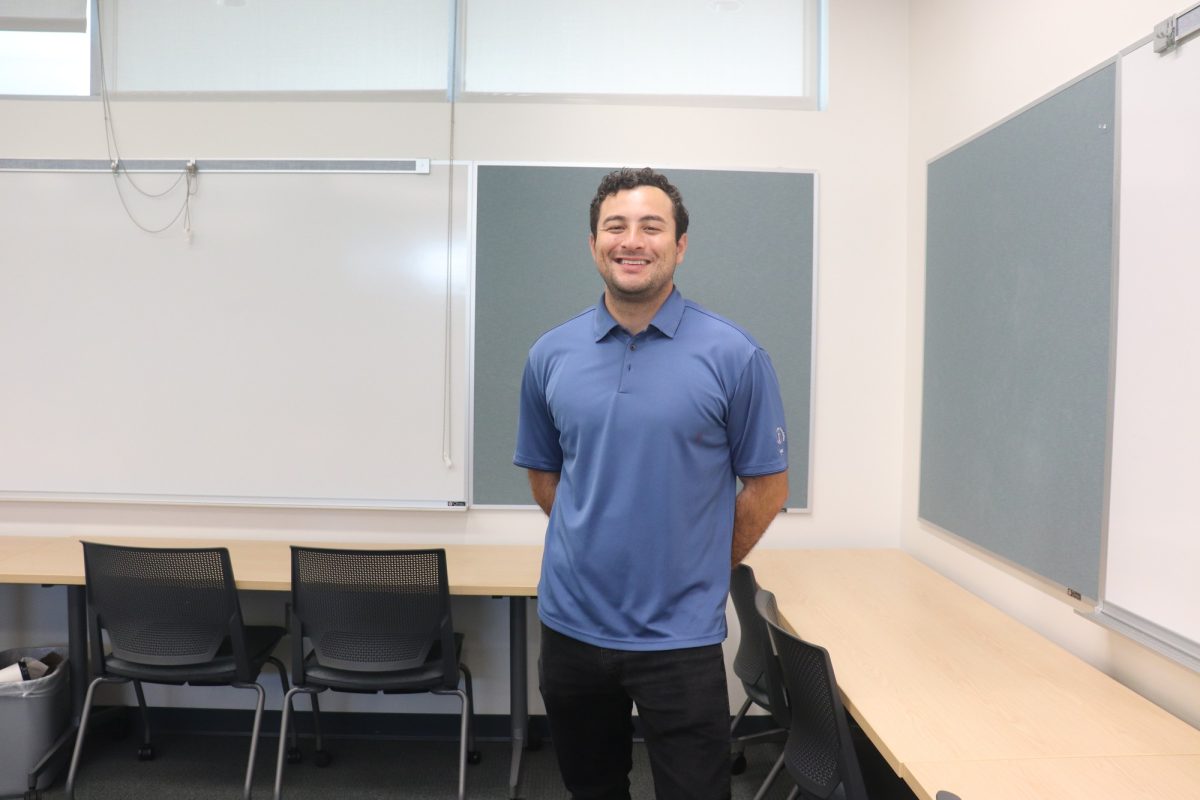
Eric Calderon has to deliver both hope and disappointment as part of his job at the Cerritos College Scholarship Foundation: encouraging students to tell their stories for scholarships while knowing many strong applicants won’t get the award.
“It’s always sad when you have to turn people down,” said Calderon, the foundation’s scholarship relations specialist. “You read some very impactful stories, some beautiful stories.”
Calderon manages and administers the foundation’s scholarships, working behind the scenes with donors and on the front lines with students. His role spans donor relations and fundraising, including onboarding new scholarships and maintaining those that have existed for decades, and student support that can make the difference between an application started and an application submitted.
The foundation uses an online platform called AwardSpring, which Calderon said typically opens the first week of each semester. Before applications go live, he coordinates with campus partners such as the Career Center and other departments to host workshops that walk students through the process, from creating an account to completing their materials.
For many students, he said, the most difficult piece is also the most personal: the essay that is required.
“I feel like that’s the hardest part for a lot of people,” Calderon said. “That’s typically where we see a dip in terms of application completion. People read that they have to write a 400 to 600-word essay about themselves, and that can be overwhelming.”
Calderon’s job, in his view, is to make that requirement feel less like a gate and more like a bridge. He offers prompts and guidance meant to help students translate lived experience into a clear narrative, the kind selection committees can understand quickly.
But even strong essays can not change one reality: scholarship dollars are limited. Calderon said he tries to be candid with students about that constraint while also widening their sense of what’s possible.
“We have a certain number of scholarships that we can offer,” he said. “I also try to encourage folks to seek opportunities elsewhere.”
He points students toward scholarships beyond the foundation, including awards offered through transfer pathways and major corporations.
He noted that many businesses have community outreach funds that function as scholarships, sometimes as a way to support local students, and sometimes as a way to cultivate future talent.
Calderon also highlights local opportunities, from city scholarships to community organizations and churches, and he reminds students that transferring can open additional doors.
“Once you get to the university, it also opens up more and more doors,” he said.
His core advice to students who are not selected is blunt and repeated: don’t stop applying.
Calderon said he regularly hears from students who applied multiple times before being awarded. Some, he said, nearly quit, then submitted an application late in their final semester and received funding.
“Please don’t get discouraged. Please don’t stop,” he said, adding that the application itself is preparation. “For the rest of your life, you’re going to be asked similar questions.” In the end, Calderon said, the work is about more than distributing money. It is about helping students believe their story is worth writing down and worth trying again.
If scholarships are often decided in a few pages, Calderon wants students to leave knowing their lives are bigger than any application.


