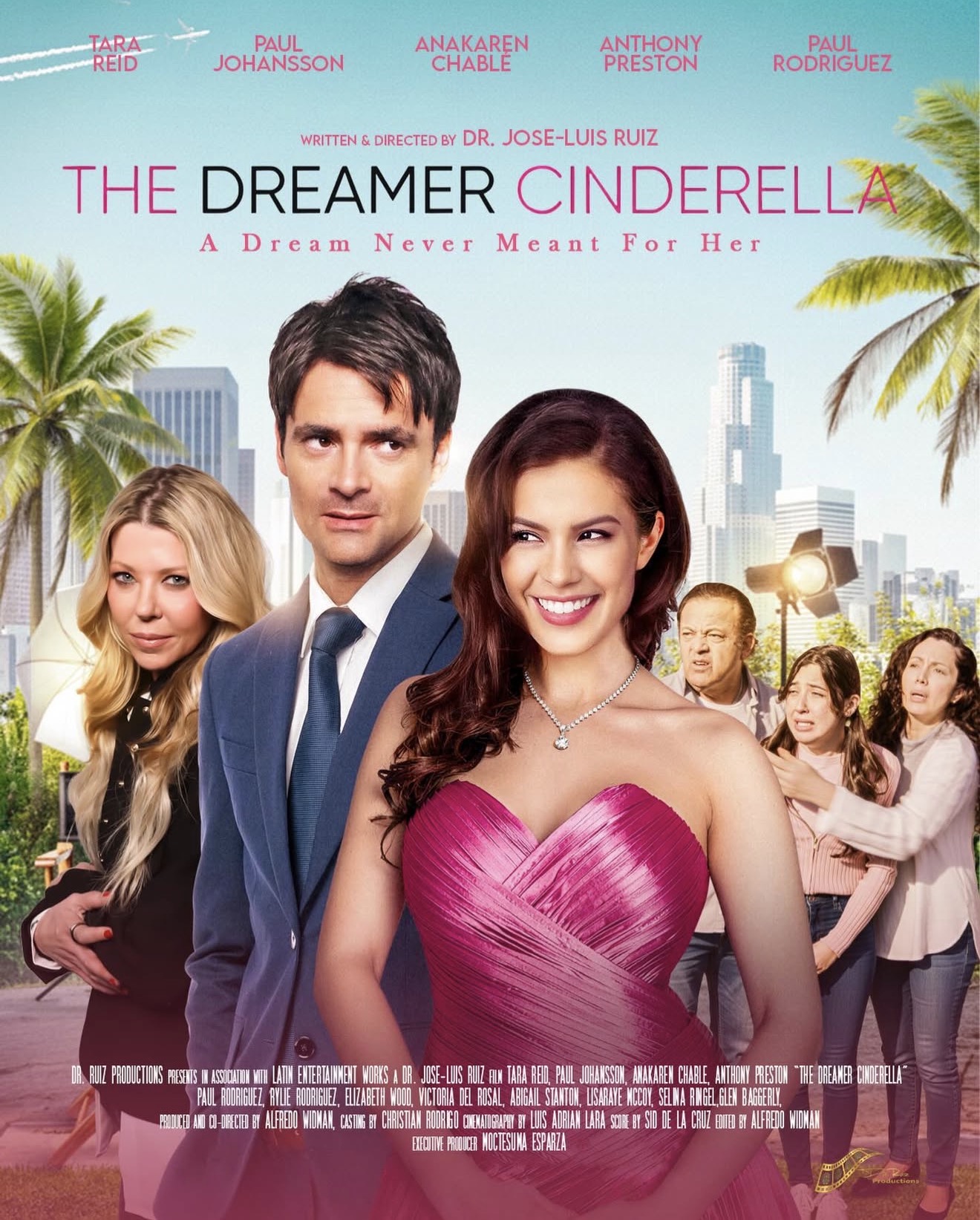
“The Dreamer Cinderella,” the 2026 modern reimagining starring Anakaren Chable, refreshes the familiar fairy tale by centering it around an immigrant fruit vendor turned movie star.
While it carries the Cinderella name, Xochitl is the film’s true protagonist, trading a glass slipper for the promise of citizenship. Director and screenwriter Jose-Luis Ruiz makes it clear that this story has love but focuses more on survival, ambition and belonging.
His mission to represent the Latinx community with dignity and grace is evident throughout the film, shaping both its narrative and visual tone.
Chable’s performance as Xochitl is the film’s greatest strength. Her ambition and self-determination radiate off the screen as her character navigates obstacles, family pressure and the unpredictability of fame.
Chable brings emotional depth to Xochitl without veering into melodrama, grounding the character in realism even when the story leans toward fantasy.
Another standout performance comes from Anthony Preston as Andrew Goldblum, whose comedic timing and grounded presence provide balance to the film. Preston’s portrayal avoids cliche, offering a charming yet restrained counterpart to Xochitl’s intensity.
His humor feels organic rather than forced, allowing moments of levity to emerge naturally within the heavier themes.
The plot itself is solid in places but uneven in others. While the film’s central message comes through clearly, some moments feel overexplained, as if the story does not fully trust the audience to grasp its themes.
When the film allows scenes to breathe, its emotional impact is strongest. When it rushes to make a point, the message can feel heavy-handed.
The antagonists, meanwhile, verge on cartoonish. Their motivations are thinly developed and their schemes lack the nuance present everywhere else in the film. While their exaggerated nature occasionally adds humor, it ultimately weakens the stakes and feels out of step with the film’s otherwise grounded tone.
Ruiz, serving as both director and screenwriter, should feel accomplished with the final cut. The film’s visual quality is crisp and polished, reflecting a careful attention to detail. However, moments of uncertainty in pacing and tonal shifts suggest a need for stronger directorial instinct. With more experience, Ruiz’s storytelling could become sharper and more confident.
The supporting cast works smoothly within the narrative, providing stability and emotional support for the story’s lead. Their performances may not stand out individually, but collectively they give the audience characters to rely on, reinforcing the film’s sense of community.
At the premiere, audience reactions made it clear that “The Dreamer Cinderella” resonated beyond its fairy tale framework. Laughter filled the theater during its lighter moments, while quieter scenes prompted reflection.
The applause that followed the credits felt less like routine appreciation and more like recognition of a story that spoke directly to lived experiences.
Ultimately, “The Dreamer Cinderella” does not reinvent cinema, but it does offer something meaningful. Its flaws are noticeable, yet they are outweighed by its sincerity and heart.
By blending Hollywood tropes with contemporary immigrant realities, the film challenges the audience to reconsider who gets to be the center of these timeless stories. Through a strong lead performance and a clear cultural perspective, “The Dreamer Cinderella” proves that even the most familiar tales can feel new when told through a different lens.